
CONCRETE & CEMENT-BASED COATING SYSTEMS · VIETNAM MANUFACTURING
Water-Based Coating Systems for Concrete & Cement-Based Products
Substrate evaluation · Primer selection · Finish development · Factory trial
Lotus develops water-based coating systems for concrete and cement-based furniture, planters, decorative products and outdoor products manufactured in Vietnam — from substrate evaluation and primer selection through finish development, factory trial and production implementation.
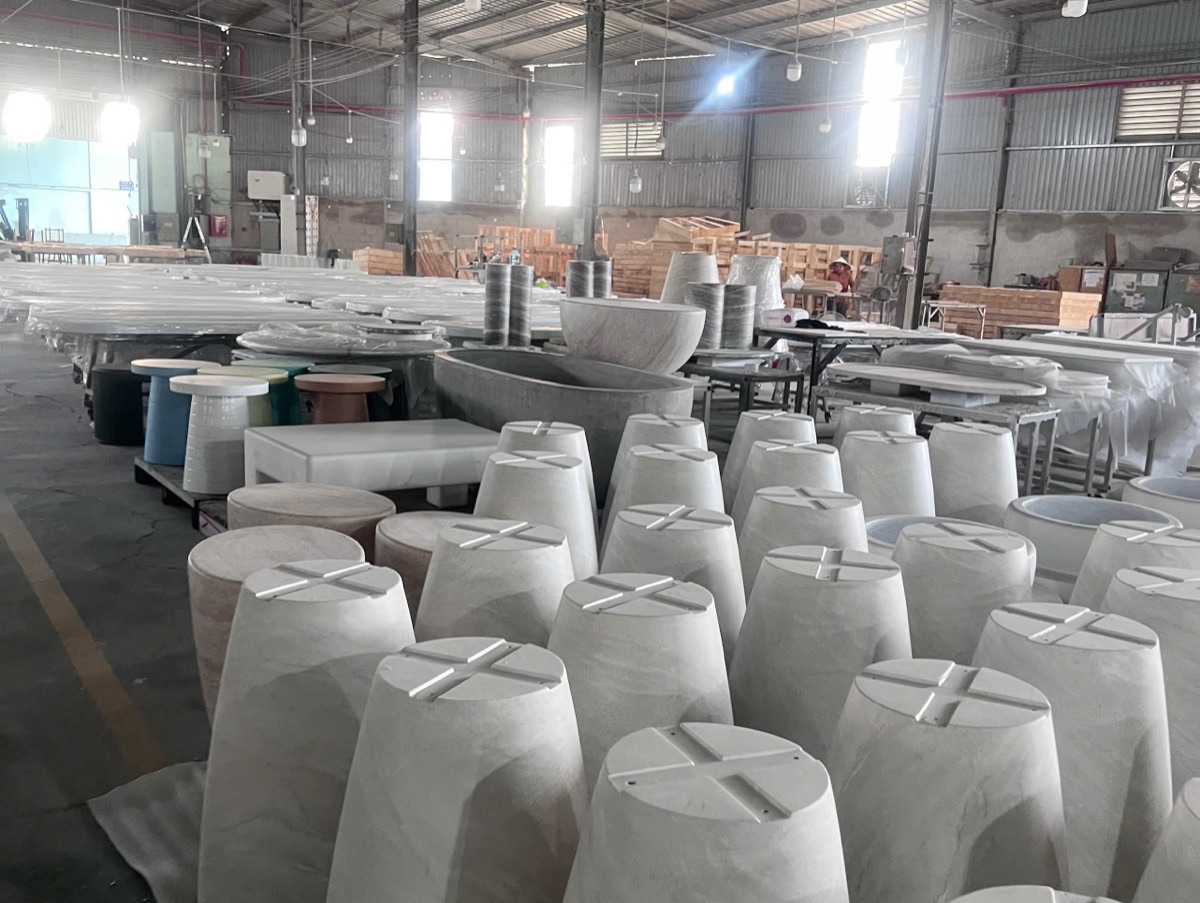
Lotus develops coating systems for cement, cement board and lightweight concrete products. Substrate condition and system structure are confirmed for each project before specification or production use.
01 / 14Application Scope
Concrete & Cement-Based Products We Work With
The appropriate coating system depends on the actual substrate, surface condition, finish requirement and production process. Substrate condition must be evaluated before the coating system is finalized.
Concrete and cement tables
Concrete and cement chairs
Decorative products
Interior products
Outdoor products
Primary substrates
Cement · Cement board · Lightweight concrete
02 / 14System Thinking
Why Concrete and Cement-Based Products Require a System Approach
Concrete and cement-based products are not simply painted like conventional smooth substrates. The substrate condition can strongly influence primer selection, coating absorption, appearance and long-term performance.
Substrate moisture
Surface absorption
Alkalinity
Cement dust
Surface uniformity
Primer selection
Finish system
Water exposure
Outdoor requirements
For concrete and cement-based products, coating performance depends heavily on substrate condition. Moisture, absorption, cement dust, surface preparation and system selection should be evaluated before production implementation.
03 / 14Substrate Evaluation
Substrate Evaluation Before Coating
Before a coating system is confirmed, the concrete or cement-based substrate is reviewed for the conditions that most commonly affect coating performance.
Moisture
The substrate needs to be sufficiently dry for the selected coating system. Moisture condition is reviewed as part of substrate evaluation rather than assumed.
Absorption
Highly absorbent substrates may require specific primer preparation to achieve a controlled coating process and a consistent appearance.
Alkalinity
An alkali-resistant primer may be selected as part of the coating system where the substrate condition calls for it.
Cement dust and surface condition
Cleaning and appropriate surface preparation are important before priming, particularly where cement dust or an uneven surface condition is present.
Coating performance can be affected by a substrate that is not sufficiently dry, excessive absorption, cement dust, insufficient surface preparation, an unsuitable coating system or unsuitable process conditions. These are factors for evaluation, not universal causes.
04 / 14Primer Selection
1K and 2K Primer Selection
The typical process moves from cleaning and surface preparation to an alkali-resistant primer and then the finish system. Primer selection depends on substrate condition, required hardness, finish system, application process and project requirements.
1K primer
A 1K primer may be suitable for certain project conditions and substrate states, subject to evaluation.
2K primer
Where the customer requires higher finished-surface hardness, a 2K primer may be preferred so that the underlying coating system has sufficient hardness and support.
Primer selection is confirmed against the actual substrate and the project requirement. A 2K primer is not a universal default; it is selected where the required finish or hardness calls for it.
05 / 14System Options
Coating System Structures
Concrete and cement-based coating systems are specified as coordinated structures, not as a product catalogue. The appropriate combination of primer, topcoat and clear coat depends on the substrate, appearance requirements, performance requirements and production conditions.
1K primer
For project conditions where a 1K primer structure meets the substrate and finish requirements.
2K primer
For projects requiring a harder supporting layer or a more robust primer structure under the finish system.
1K topcoat
For applications where a 1K finish meets the appearance, performance and production requirements.
2K topcoat
For applications requiring a higher-performance finish layer, subject to technical evaluation.
1K clear coat / varnish
For projects requiring a clear protective layer within a 1K system structure.
2K clear coat / varnish
For projects requiring a clear layer within a 2K system structure, for example where outdoor or hardness requirements apply.
The exact system depends on the application. Coating structures are confirmed after substrate evaluation and sample approval rather than selected as a fixed product combination.
06 / 14Finish Development
Colour, Texture and Finish Development
Finish development starts from the customer's required appearance and the actual substrate condition. Lotus can work from a customer sample or reference and adjust the colour and finish before the system moves toward production validation.
Sample approval allows the customer to evaluate colour and appearance internally — including at their own factory — before the system moves into production-scale validation.
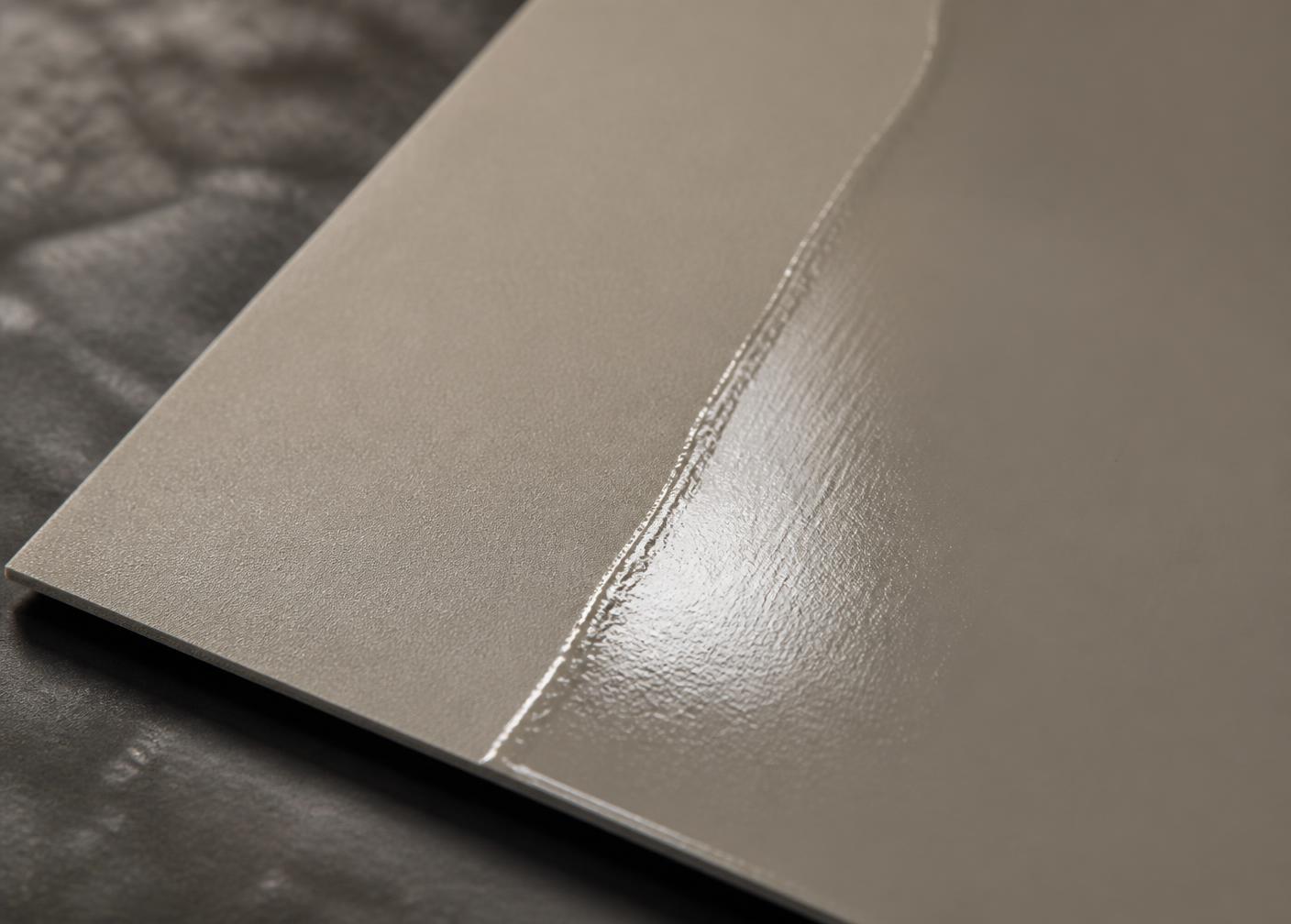
Development workflow
Customer sample or reference → Lotus sample development → Colour and finish adjustment → Customer internal testing → Approval → Factory trial
Solid colour · Matte · Satin · Gloss · Stone-like · Textured · Wood-look · Decorative
07 / 14Topcoat & Clear Coat
Topcoat and Clear-Coat Selection
The topcoat and clear-coat layers are selected around the intended use of the product rather than applied as a fixed finishing step.
Clear-coat selection is important where colour stability and appearance are critical, particularly on light or white finishes. Where a customer has a specific appearance requirement, the system is developed and validated accordingly.
System options
1K topcoat · 2K topcoat · 1K clear coat / varnish · 2K clear coat / varnish
Indoor or outdoor application
Surface hardness
Water exposure
Scratch requirements
Appearance requirements
Temperature variation
UV and exposure requirements
08 / 14Outdoor Requirements
Outdoor Requirements
Outdoor concrete and cement-based products may require a different finishing system from indoor products, particularly in the topcoat and clear or varnish layers. For outdoor applications, a 2K system may be used to provide a more suitable balance of surface hardness, water resistance, temperature-variation resistance and scratch resistance for the intended exposure conditions.
Water exposure
Temperature variation
Surface hardness
Scratch resistance
Outdoor exposure
UV requirements
Outdoor concrete products may require a different topcoat and clear-coat system from indoor products, particularly when water exposure, temperature variation, hardness and scratch resistance are important requirements.
System selection for outdoor use takes into account water exposure, temperature variation, surface hardness, scratch resistance and UV or exposure requirements. Outdoor suitability is confirmed through evaluation and validation rather than assumed.
09 / 14Production Challenges
Common Coating Challenges
Concrete and cement-based products can present application and performance issues that require substrate and process evaluation rather than assumed causes.
High absorption
The substrate can absorb coating differently across the surface, which can affect appearance and film build if not managed through preparation and primer selection.
Bubbling
Bubbling can occur as a production or application issue and requires investigation of substrate and process conditions before a cause is assumed.
Slow drying
Drying behaviour needs to be evaluated against the coating, the application method and the production conditions.
Adhesion after prolonged water exposure
Coating can fail after prolonged immersion in water if the substrate preparation and coating system are not appropriate for the application. Water-exposure requirements should be considered during system selection and factory validation.
Uneven surface and orange peel
Surface leveling can affect the final appearance and should be evaluated during application optimization and factory trials.
10 / 14Factory Trial
From Approved Sample to Factory Trial
The purpose of a factory trial is not only to confirm appearance, but also to understand how the coating system behaves under the actual production process.
- 01
Product requirement
Understand the product, intended use, exposure conditions and required appearance.
- 02
Substrate evaluation
Review substrate type, moisture, absorption, alkalinity, cement dust and surface condition.
- 03
Primer and system selection
Define the primer direction and finish-system structure around the substrate and requirements.
- 04
Sample development
Develop the colour or finish from the customer sample or reference and adjust where required.
- 05
Customer internal testing
The customer evaluates the developed sample internally before approval, including at their own facility where applicable.
- 06
Approval
Confirm the approved sample as the reference direction before production-scale validation.
- 07
Factory trial
Apply the proposed system under the manufacturer's actual equipment, process and production conditions.
- 08
Process optimization
Adjust preparation, spray setup, coat sequence, timing or process conditions where the trial requires it.
- 09
Production implementation
Move to production with the approved system and process aligned between the parties.
Factory support scope
Primer selection and application · Coating preparation · Spray-gun setup · Number of coats · Application timing · Troubleshooting · Process adjustment · Production-efficiency optimization
11 / 14Technical Documentation
Technical Documentation
Technical documentation is available by technical request according to the confirmed coating system, substrate, application scope and project requirements.
DOC · TDS
TDS
Technical Data Sheets — Technical information for the confirmed coating system and application scope.
Available by technical request
DOC · SDS
SDS
Safety Data Sheets — Safety and handling information for the relevant products.
Available by technical request
DOC · GUIDE
GUIDE
Application Guidance — Surface preparation, primer selection, application process and factory trial considerations.
Available by technical request
DOC · DATA
DATA
Test & Reference Data — Relevant technical or reference information associated with the confirmed system and evaluation scope.
Available by technical request
12 / 14Why Lotus
Why Concrete & Cement Manufacturers Work With Lotus
Lotus Paint is a water-based coatings brand by Bich Trang Production Trading Service Co., Ltd., supporting coating-system development, sampling and factory implementation for products manufactured in Vietnam.
Water-based coating experience
Lotus has more than 10 years of experience developing water-based coating systems.
System-level approach
Substrate, primer, topcoat, clear coat and application process are considered together rather than as separate products.
Finish development
Colour and appearance can be developed from customer references, including textured, stone-like, wood-look and decorative directions.
Factory support
Lotus supports factory trial and application or process optimization under actual production conditions.
Requirement-based development
Lotus can test and develop coating approaches for project-specific requirements rather than forcing every project into a standard solution.
13 / 14Who This Is For
Who This Solution Is For
US/EU brands sourcing from Vietnam
For brands defining concrete or cement-based product requirements before manufacturing or supplier coordination.
Furniture and outdoor furniture brands
For collections using concrete or cement-based tables, chairs, planters and outdoor products.
Product development teams
For teams reviewing colour, texture, surface appearance, sample development and application feasibility.
Procurement & specification teams
For teams that need a defined coating-system direction before approving production use.
Quality / QA / QC teams
For teams evaluating the coating system against project-specific performance and production requirements.
Vietnamese manufacturers
For factories implementing the proposed coating system under actual manufacturing conditions.
OEM/ODM factories
For manufacturers coordinating buyer requirements, sampling and production deployment in Vietnam.
Decorative product manufacturers
For cement-based decorative objects where surface finish and appearance are primary requirements.
Related system
Wood Coating Systems
For solid wood, MDF, veneer, wood components and furniture requiring a defined coating system.
Explore Wood Coating SystemsRelated system
Composite Coating Systems
For resin-based composite furniture, planters and outdoor products where the substrate and finish system are evaluated together.
Explore Composite Systems14 / 14Questions
Concrete & Cement Coating Specification Questions
Lotus has experience coating concrete and cement-based planters, tables, chairs, decorative products, interior products and outdoor products.
Yes. The main substrates Lotus works with include cement, cement board and lightweight concrete. Other cement-based substrates can be reviewed subject to evaluation.
Concrete and cement-based substrates can have high absorption, alkalinity, cement dust and uneven surface conditions. Primer selection and surface preparation strongly influence coating appearance and performance.
Where the customer requires higher finished-surface hardness, a 2K primer may be preferred so the underlying coating system has sufficient hardness and support. Primer selection still depends on substrate condition and project requirements.
Yes. The workflow can move from customer sample or reference to sample development, colour and finish adjustment, customer internal testing, approval and factory trial.
Lotus has experience developing solid colour, matte, satin, gloss, stone-like, textured, wood-look and decorative finishes for concrete and cement-based products.
They can be. Outdoor products may require a different topcoat and clear-coat system, taking into account water exposure, temperature variation, surface hardness, scratch resistance and UV or exposure requirements.
Coating can fail after prolonged water immersion if the substrate preparation and coating system are not appropriate. Water-exposure requirements are considered during system selection and validated during factory trials.
Clear-coat selection is important where colour stability and appearance are critical, particularly on light or white finishes. Where a specific appearance requirement exists, the system is developed and validated accordingly.
Yes. Lotus can support primer selection and application, coating preparation, spray-gun setup, number of coats, application timing, troubleshooting, process adjustment and production-efficiency optimization within the agreed trial scope.
Provide the product type, substrate type, indoor or outdoor application, target colour and finish, water exposure requirements, hardness requirement, application method if known, production location, current coating system if relevant and technical documentation requirements.
Technical Inquiry
Specify a Concrete & Cement-Based Coating System
Send the product and substrate information, indoor or outdoor application, finish target, exposure requirements, production context and technical documentation requirements. Lotus can review the requirement and define the next step for sampling or factory trial.
- Product type
- Substrate type
- Indoor or outdoor application
- Target colour
- Target finish
- Water exposure requirements
- Hardness requirement if applicable
- Application method if known
- Production location in Vietnam
- Current coating system if relevant
- Technical documentation requirements